
Principal’s Blog
We have had some wonderful talks at College in the short time since we started term.
Chris Steele
Chris Steele gave an outstanding Principals Conversation to a packed Amersi Room of 110 people. He gave a wide sweep of world events and spoke about his excellent book Unredacted Russia, Trump And The Fight For Democracy. One of his important insights was that whilst the rest of the world saw Trump as an aberration, China did not and predicted and prepared for a second Trump term of office. Congress was not doing its job. He posited that the question of whether the US military would obey illegal orders would rise up the agenda. He emphasised that Russia had suffered humiliation in the War against Ukraine which they expected to win speedily. Indeed he saw Russia (where he served as head of the MI6 desk) as a “dying power”. Only Trump treats Russia with respect and superpower status.
The key feature was that Trump neither believes or values democracy or the Rule of Law and his US no longer shares values or even interests with us. In retrospect the great pivot in world events was probably 2016, Trump 1 and Brexit. Might and size now matter with medium and small powers unprepared and needing to adjust.
The irony of the situation is that this era demands greater international co-operation, especially over climate change and public health issues (pandemic) but the response is nationalism and autarchy.
Martin Stern
Martin Stern gave the Holocaust Memorial Day reflection in chapel on 25 January. He is an alumnus and a retired Consultant Immunologist. He was 5 years old and living in Holland when he was taken to the Terezin Concentration Camp (Theresienstadt) by Dutch Nazi collaborators. He said that if we get our history wrong we will get everything wrong but we also had to fight anti semitism in the present. The massive role of German universities in the development of Nazism is well known to historians but hugely underappreciated by others. Not only did famous professors at leading universities propagate theories adopted and put into horrific practice by the Nazis, but membership of and support for the Nazis was greater in universities than in the working class.
Gill Barr
Northern Ireland poet Gill Barr spoke to an eclectic and engaged audience on Friday 23rd January at the second SCR event of the year. Gill shared her experience of growing up in Derry/Londonderry in the early seventies, during the conflict which has come to be known as The Troubles. She illustrated her experience with readings from her poetry collection A Wide River Divides Us, published by Cinnamon Press in 2025.
Gill’s childhood poems, which displayed ‘a deeply unsettling juxtaposition of terror and domesticity,’ were further illuminated by a poetry-film, which included recently discovered BBC footage of the poet as an 8 year old. The affecting poetry-film will be screened at the Kunstlerhaus, Vienna in April 2026.
Two-thirds of Gill’s collection moves beyond her childhood experience. She reflects: ‘There is violence in the grass as well as growth.’ Her theme of division expands into adulthood and is explored variously with lyricism, humour and acuity. She comments in A Line in the Sand: ‘Others live with the edge, / knowing there is no division, / only words dividing the one from the other; / no sea, no shore, only gradations / of life attuned to the changing.’ In the end, Gill’s poems seem to affirm our need to attempt to communicate, to connect despite the greatest of divides.
Leonora Dawson Bowling
Leonora Dawson Bowling gave a talk written by her father Paul Dawson Bowling a highly respected alum of ours on Wagner to the SCR. He sadly passed away two weeks before he was due to give it and in a poignant tribute Leonora (herself an opera singer) read the talk. Paul published a monumental 3 volume work Wagner: The Complete Experience and its meaning to us.
I regret that we have heard of several deaths of people connected to College.
Charles Scott
It was with great sadness that we learnt of the sudden death of the wonderful Charles Scott (Jurisprudence, 1976) in early January. Charles spent many years advising the College on its investments and was due to take over the Chair of the Investment Advisory Committee.
Charles worked in investment banking with Wood Gundy until 1985. From then until 2007, he held a number of positions at Morgan Stanley, including Director of European Investment Research, Head of Equity Sales in Europe, Co-Head, Global Asset Manager Client Coverage Group and Chief Operating Officer, Morgan Stanley UK. Charles was also Chairman of Trustees of the Morgan Stanley International Foundation. After retiring from Morgan Stanley, Charles held a number of positions with investment management companies. He was currently a Director of Polar Capital Funds Limited and Chairman of MAN Fund Management UK Ltd, and a Trustee of Muscular Dystrophy UK. His interests included mountaineering, skiing, tennis, conservation, theatre and choral music.
There will be a memorial service at Brasenose in the coming months and we will let you have details of this as soon as possible.
Professor Daniel Walker Howe
It is with great sadness that we heard of the passing of Professor Daniel Walker Howe on Christmas Day at his home in Los Angeles. He was 88.
Professor Howe was an eminent American and the Rhodes Professor of American history at Oxford, spending roughly a decade here before retiring in the early 2000s. He was a member of the BNC Senior Common Room and held his Professorial Fellowship at St Catherine’s College. He spent a lot of time in Brasenose at dinners and social events and he was quite active in the college.
Professor Howe’s final book, published just as he was retiring from Oxford, won the Pulitzer Prize in American history.
Prof David Abulafia
David was a Fellow in History of Gonville and Caius, Cambridge our sister College and a regular visitor to Brasenose. His 2011 book The Great Sea about the history of the Mediterranean won many prizes and was followed up by a 1000 page work on seas generally called The Boundless Sea; A Human History of the Oceans. He was also a regular contributor to The Spectator.
In happier news, we had two associates of the College on Start the Week two weeks running. First up was Rosamund Bartlet discussing her new book on 19 January and the following week Jo Kavenna talking about her well received new work Seven.
We are also delighted to record that our alumnus Prof Sir Mike Stratton has been awarded the 2026 Jessie Stevenson Kovalenko Medal by the National Academy of Sciences of the USA (the US equivalent of the Royal Society).
It has this attribution: ‘The Kovalenko Medal honors outstanding research in the medical sciences. You are receiving the Kovalenko Medal in recognition of your “leadership in exploring the genome landscapes of cancer and normal cells, discovering cancer susceptibility genes that have reduced cancer incidence in high-risk individuals, somatically mutated cancer genes providing targets for new anti-cancer therapies and mutational signatures revealing the environmental, lifestyle and endogenous exposures causing cancer.”’ Mike has recently stepped down as the Head of the Sanger Centre at Cambridge and is still a Fellow there.
Members of the JCR, HCR and SCR all enjoyed our traditional Burns Night celebration of the Bard. Piped into Hall by our very own Holly Bartlett, the Haggis was addressed, toasted, and gratefully devoured. After dinner, Burns’ Immortal Memory was thoughtfully proposed by Lilly Law, the Lassies toasted wittily – in verse – by Oscar Potts, with an again witty, and wise, reply – once more in verse – by Ava Doherty. With the tables in Hall rearranged there followed joyous ceilidh dancing (closing with the perennial favourite ‘Strip the Willow’); even those entirely new to ceilidhing made more than something of the dancing.
With thanks to Carole Bourne Taylor for the material on the SCR Meeting and Chris Timpson for that on Burns Night.
Explore more blogs
-
LATEST BLOG
Statement in Response to The University of Oxford’s Annual Admissions Statistical Report 2026
Published 25th June 2026
-
LATEST BLOG
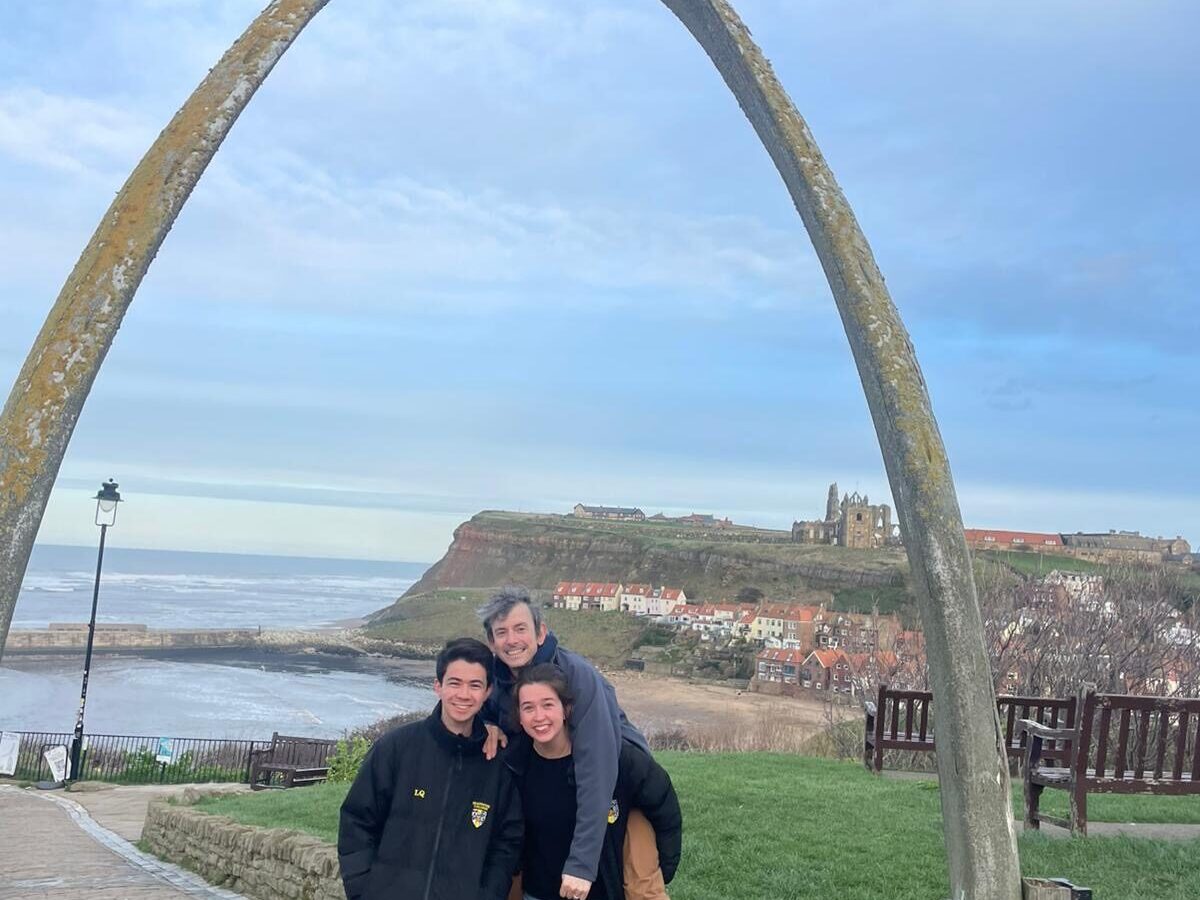
A year and a half of studying at Brasenose has been the most incredible time of my life.
Published 8th April 2026
A year and a half of studying at Brasenose has been the most incredible time of my life.
-
LATEST BLOG
Principal's Blog: 26th February
Published 26th February 2026
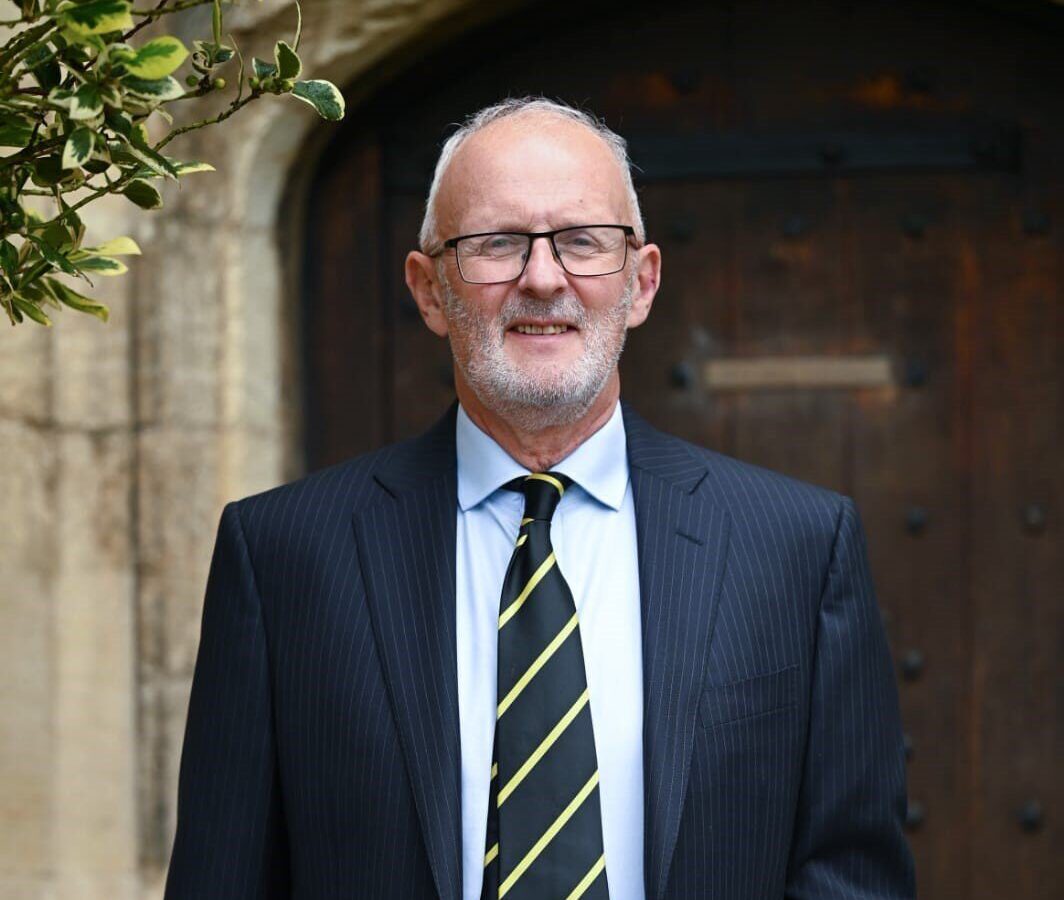
Our Principal, John Bowers, shares more thoughts on his time at the College.