

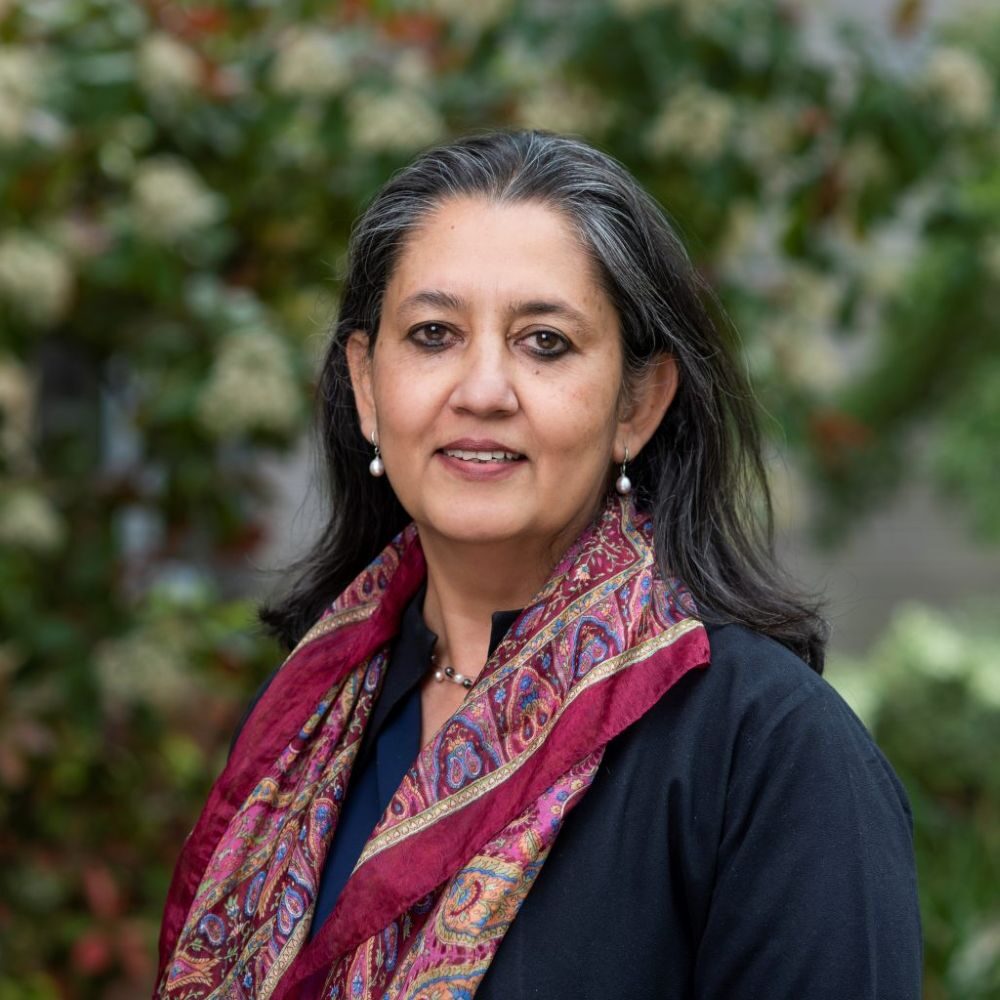
Professor Sonali Nag
BA MA Hyderabad, MPhil Bangalore, PhD Port
Supernumerary Fellow
I am Professor of Psychology and Education and Education Fellow of Brasenose College.
I am also convenor of the Child Development and Learning group and the lead for the Language, Cognition and Development Theme in the Department.
I serve as a reviewer for national and international research councils and high-impact journals in the fields of child development, experimental and developmental psychology, psycholinguistics, neuroscience, education, and development studies. I have initiated and led international networks for the study of the akshara writing system of Asia, foundation learning in low- and middle-income countries, and support for language development at school entry. I have written evidence briefs, drafted education policies, and led curriculum reform for the early childhood and primary school years. I have also been an invited panel member in agenda-setting meetings for multilateral agencies. I particularly enjoy working with practitioners and supporting practitioner networks.
Trained in psychology, with interdisciplinary research interests, I investigate child learning within diverse settings. My research is comparative, with a focus on languages, writing systems, cultural settings, and levels of socio-economic status. I use a wide variety of methods, including surveys in school and home settings, child assessment, corpus analysis, secondary data analysis, and narrative reviews. My work seeks to develop a nuanced and contextually grounded understanding of child development. My research can broadly be categorised into the study of child-level factors and contextual factors.
I study writing systems, language, and literacy development. A primary location for this work is multilingual India, with a focus on Kannada, Bengali, Tamil, and Hindi. With my students, I have also worked on other languages in Asia (such as Thai, Sinhala, Filipino, Manchu, and Mandarin), Africa (such as Swahili), and Europe (such as Albanian and English). Taken together, this body of work has helped to understand how the particularities of a language and the design features of a writing system influence learning. Since 2020, I have been working with collaborators on interventions to support children’s oral language development. Another recent line of my work examines children’s books to better map the real-world demands of reading with comprehension among young learners.
I also study the effects of contextual factors on literacy learning using an unparalleled database spanning thirty years of research in low- and middle-income countries. This work synthesises descriptive, correlational, and causal evidence to inform theory, policy, and practice. My work on child assessment, for example, has drawn attention to the large-scale replication of Western tests even when education systems are not teaching a European language or an alphabetic writing system. My examination of literacy interventions highlights the limited attention paid to potentially valuable cultural practices, including oral and choral language traditions and learning-by-writing.