

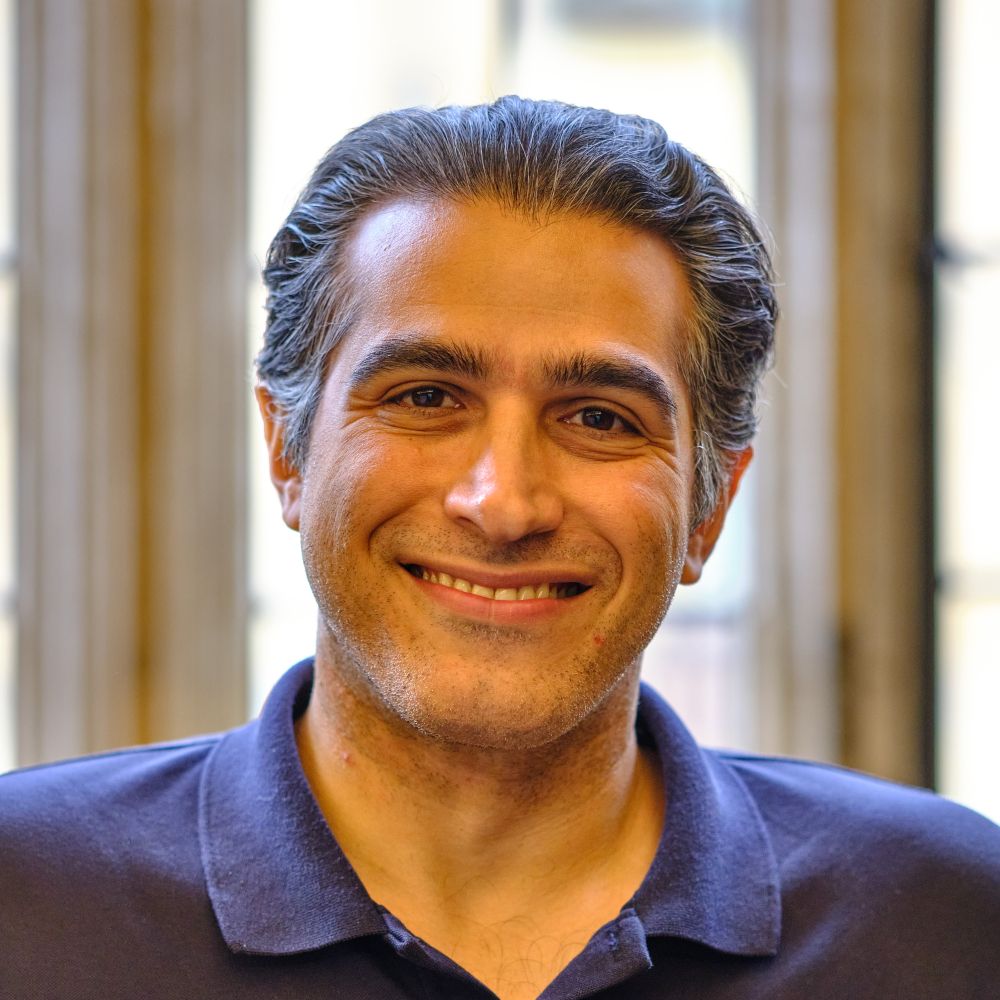
Professor Faraz Mardakheh
PhD, FHEA
Tutorial Fellow
I studied Biochemistry as an undergraduate at the University of Birmingham, where I also completed my PhD in the laboratory of Professor John Heath. My doctoral research was focused on understanding oncogenic signal transduction in cancer. Following this, in 2010 I joined the laboratory of the late Professor Chris Marshall at the Institute of Cancer Research as a postdoctoral fellow, in order to study cancer invasion and metastasis. An unexpected discovery during my postdoctoral research steered my focus towards RNA Binding Proteins (RBPs) — molecules that control how genetic information is decoded and used in every cell. This led to receiving an MRC Career Development Award fellowship in 2017 to establish my own research group at the Barts Cancer Institute, Queen Mary University of London, focusing on studying the role of RBPs in cancer development and progression.
In 2024, I moved my laboratory to the Department of Biochemistry, University of Oxford, where I continue my research on RBPs and their roles in cancer initiation and progression.
I tutor the biochemistry students at Brasenose College, and also teach on the Molecular and Cellular Biochemistry course in the Department of Biochemistry.
As the biochemistry fellow, I work closely with Brasenose undergraduate biochemistry students across all four years of their degree. In the first year, much of our focus is on building a strong foundation in biochemistry. In later years, tutorials become more specialised, allowing us to go deeper into more advanced areas of biochemistry such as gene expression regulation, metabolism, and cell signalling, and learn how these processes go wrong in diseases like cancer.
I also teach on the Molecular and Cellular Biochemistry course in the Department of Biochemistry, which gives our students the chance to better connect their college-based tutorials with the wider departmental teaching. One of the most rewarding aspects of my role is seeing how students develop intellectually over time, from grasping the fundamentals in their first year, to being able to critically evaluate complex research papers and design their own experiments by their final year.
My laboratory aims to elucidate the mechanisms by which RNA-binding proteins (RBPs) are regulated by various signalling pathways, and how dysregulation of these regulatory processes contributes to cancer development and progression. RBPs are central post-transcriptional regulators of gene expression, orchestrating all aspects of the RNA function and regulation, but despite their fundamental importance, the mechanisms by which their activities are dynamically modulated in response to various signalling cues remain poorly understood. We are particularly interested in how oncogenic signalling pathways reprogram RBPs function, and how these alterations contribute to oncogenesis. Ultimately, our goal is to define cancer-specific RNA–RBP regulatory networks that may serve as the basis for novel therapeutic strategies for tackling different cancers (e.g. RNA therapeutics aimed at targeting specific RNA-RBP regulatory modules).
For the full list of publications, please visit:https://scholar.google.com/citations?user=vP64H10AAAAJ