
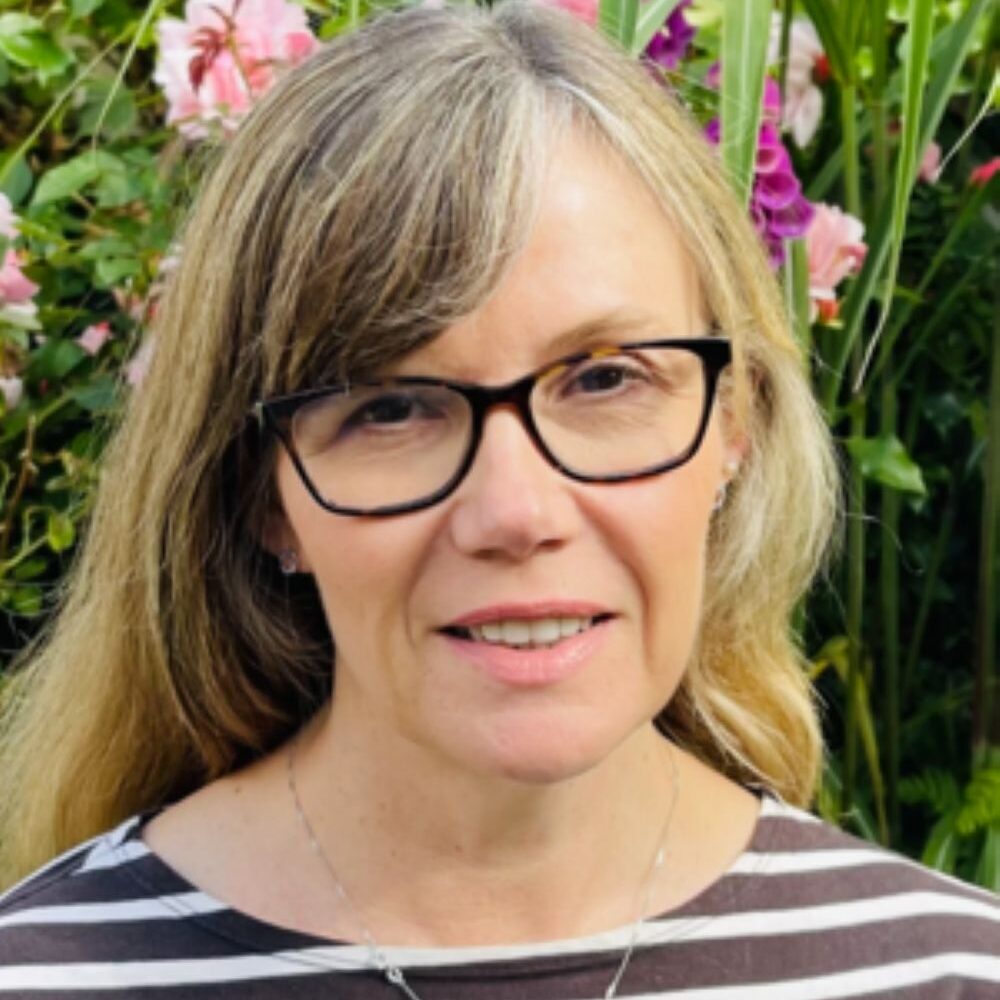
Professor Emily West
BA Liv, MA Manc, PhD Liv, FRHistS
Supernumerary Fellow
Originally from South Wales, I grew up in Leicester before completing my undergraduate degree and PhD in Economic and Social History at the University of Liverpool. I taught at Liverpool, Newcastle and Reading universities prior to arriving in Oxford. I am currently chair of British American Nineteenth Century Historians (BrANCH) and an associate editor of Slavery and Abolition.
For undergraduates, I teach on the American History (EWF) papers, and a Further Subject on the lives of enslaved people in the US. I also contribute to the Disciplines and Approaches papers.
All my teaching draws upon my interests in social history and peoples everyday lives, the history of women and of gender, and the history of race and ethnicity.
As an historian of women’s lives under American slavery, all my research has focussed upon enslaved women’s everyday experiences, including their relationships with their spouses and communities, their experiences of motherhood, and their labour for enslavers, including enforced wetnursing.
My books include Chains of Love: Slave Couples in Antebellum South Carolina (2004), Family or Freedom: The Expulsion and Enslavement of Free People of Color in the Antebellum South (2012), Enslaved Women in America (2014), and Cooking for the Quarters: Enslaved Women and the Labor of Care in the Antebellum South (forthcoming, 2026). I have also co-edited two books arising from journal special editions: Motherhood, Childlessness, and the Care of Children in Atlantic Slave Societies, ed. Camillia Cowling, Maria Helena P.T. Machado, Diana Paton, Emily West (2020) and Slavery and Emotions in the Atlantic World ed. Beth Wilson and Emily West (2024). I have published many articles and book chapters on these topics too, most notably ‘“Mothers’ Milk”: Slavery, Wet-Nursing, and Black and White Women in the Antebellum South’, Journal of Southern History 83, 1 (Feb. 2017).
I have worked with the Lowcountry Digital History Initiative at the College of Charleston to develop a collection about enslaved women in USA:
https://ldhi.library.cofc.edu/exhibits/show/hidden-voices
Most recently I have advised on episodes of ‘Finding Your Roots’, based in the USA. In this PBS show Henry Louis Gates tracks the ancestries of various prominent people from diverse backgrounds: https://www.pbs.org/show/finding-your-roots/
Books
Cooking for the Quarters: Enslaved Women and the Labor of Care in the Antebellum South (Cambridge University Press, forthcoming 2026) Slavery and Emotions in the Atlantic World, ed Beth Wilson and Emily West (Abingdon: Routledge, 2024).
Motherhood, Childlessness, and the Care of Children in Atlantic Slave Societies, ed. Camillia Cowling, Maria Helena P.T. Machado, Diana Paton, Emily West (Abingdon: Routledge, 2020), 376pp.
Co-editor and introduction co-author. 25% contribution. Enslaved Women in America (Lanham, MD: Rowman & Littlefield, 2014), 157pp.
Family or Freedom: The Expulsion and Enslavement of Free People of Color in the Antebellum South (Lexington: University of Kentucky Press, 2012), 233pp.
Chains of Love: Slave Couples in Antebellum South Carolina (Urbana and Chicago: University of Illinois Press, 2004), 184pp.
Articles in refereed journals
‘Fertility Control, Shared Nurturing, and Dual Exploitation: The Lives of Enslaved Mothers in the Antebellum United States’ (with Erin Shearer, UROP student) Women’s History Review 27, 6 (2018), 1006-1020.
‘Reflections on the History and Historians of the Black Woman’s Role in the Community of Slaves: Enslaved Women and Intimate Partner Violence’, American Nineteenth Century History, 19, 1 (2018), 1-21.
‘“Mothers’ Milk”: Slavery, Wet-Nursing, and Black and White Women in the Antebellum South’ (with R.J. Knight, UROP student), Journal of Southern History 83, 1 (Feb. 2017), 37-68.
‘Women, Enslavement and Expulsion on the Eve of the American Civil War’ Women’s History Review 22, 3 (June 2013), 460-77. ‘Gender in eighteenth and nineteenth century America’ Review article, The Historical Journal, 52, 1 (March 2009), 253-64.
‘“She is dissatisfied with her present condition”: Requests for Voluntary Enslavement in the Antebellum American South’ Slavery and Abolition 28, 3 (2007), 329-50.
‘Tensions, Tempers and Temptations: Marital Discord among Slaves in Antebellum South Carolina’, American Nineteenth Century History 5, 2 (2004), 1-18.
‘Masters and Marriages, Profits and Paternalism: Owners’ Perspectives on Cross-Plantation Unions in Antebellum South Carolina’ Slavery & Abolition 21,1(2000), 56-72.
‘The Debate on the Strength of Slave Families: South Carolina and the Importance of Cross-Plantation Marriages’ Journal of American Studies 33, 2 (1999), 221-41.
‘Surviving Separation: Cross-Plantation Marriages and the Slave Trade in Antebellum South Carolina’ Journal of Family History 24, 2 (1999), 212-31.
Book chapters
‘Gender in the Old South’. Co-written with Catherine Clinton in Reinterpreting Southern Histories: Essays in Historiography, eds. Craig Thomson Friend and Lorri Glover (Baton Rouge, Louisiana State University Press, 2020).
‘The Union of Enslaved Couples during the Disunion of the Nation: Love, Discord, and Separations at the Ending of US Slavery’, in Union and Disunion in the Nineteenth Century’ ed. James Gregory and Daniel Grey (Abingdon: Routledge, 2019), 169-185.
‘Nominal Slavery, Free People of Colour and Enslavement Requests: Slavery and Freedom at the “edges” of the Regime’, in The Many Faces of Slavery: Non-Traditional Slave Experiences in the Atlantic World, eds. Catherine Armstrong, Lawrence Aje (London: Bloomsbury, 2019), 199-210.
‘Free People of Color, Expulsion and Enslavement in the Antebellum South’ in William Link and David Brown (eds.), Citizenship and Identity in the Nineteenth-Century South (Gainesville, University of Florida Press, 2013), 64-83.
‘“He came sometimes without de pass”: Cross-Plantation Marriages and Enslaved Families in Antebellum South Carolina’ in Craig Thompson Friend and Anya Jabour (eds.), Family Values in the Old South (Gainesville: University of Florida Press, 2010), 42-61.
‘Dolly, Maria, Lavinia, and Susan: Enslaved Women in Antebellum South Carolina’, in Marjorie Spruill, Joan Johnson and Valinda Littlefield (eds.), South Carolina Women: Their Life and Times (Athens and London: University of Georgia Press, 2009).