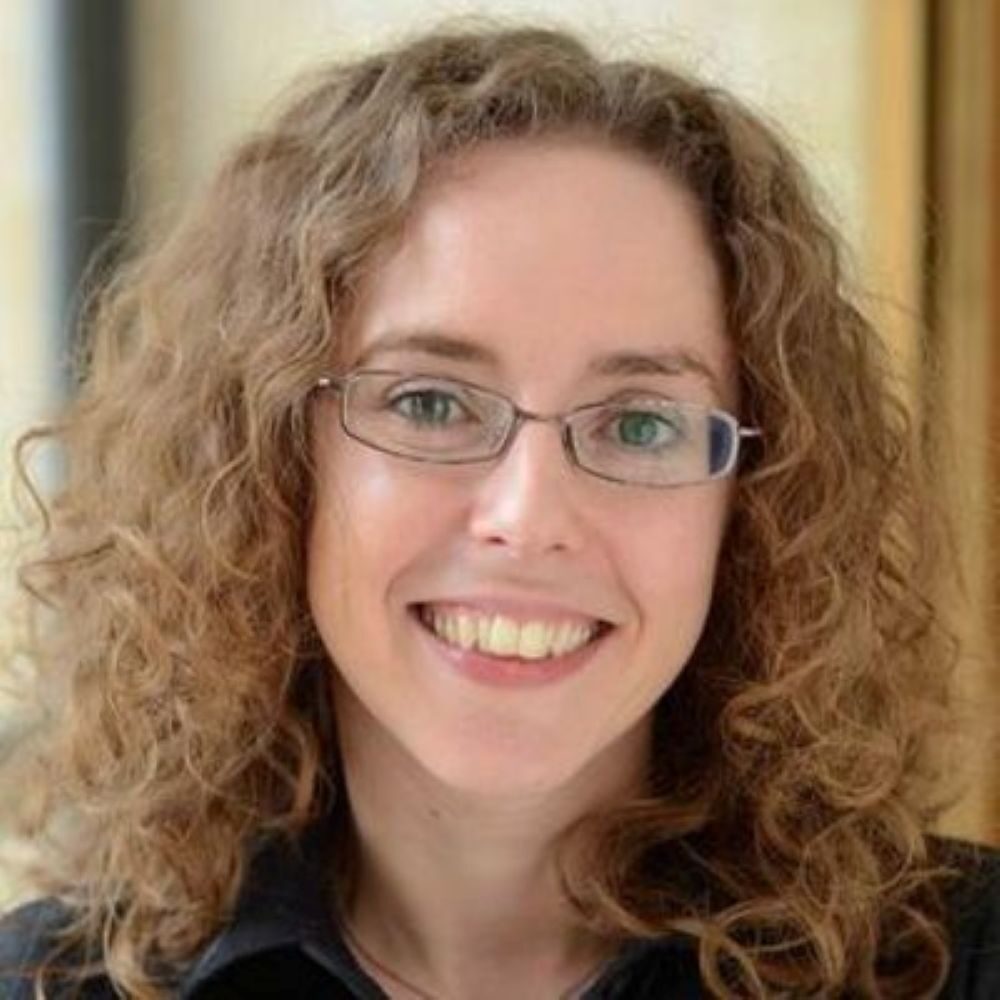
Professor Polly Jones
BA, MPhil, DPhil Oxf
Stipendiary Lecturer
I completed my BA, MPhil and DPhil degrees at Oxford (New College and St Antony’s College). I was the Harlech scholar at Harvard, and held junior research fellowships at St Antony’s College (the Max Hayward fellowship) and Worcester College. I was lecturer for seven years at the School of Slavonic and East European Studies, University College London, and a Davis fellow at Princeton University’s Davis Center for Historical Studies before taking up the Schrecker-Barbour fellowship and Associate Professorship at University College in 2012; I was promoted to Professor in 2020.
I am co-editor of Bloomsbury’s Russian Shorts series and have chaired juries including BASEES’ Alec Nove Prize (2022-25), and the ASEEES Cohen-Tucker Dissertation prize (2025-28). I have previously served as deputy chair of the Faculty of Medieval and Modern Languages, and am currently the faculty Director of Research Impact.
I teach a wide range of modern Russian literature, culture and language at undergraduate and graduate level for the faculty and college, including specialist courses on Gulag literature and late Soviet literature. I welcome research student (DPhil, MPhil) enquiries for supervision of projects on 20th or 21st-century Russian literature and cultural history, and transnational or interdisciplinary projects on the socialist bloc, memory studies and biography. Current and recent research supervision includes:
- Hybrid War and Hybrid Memories: the Russo-Ukrainian Сonflict in Film (Sofia Kosourova)
- Russian and Ukrainian war literature for children (Magdalena Blincoe-Deval)
- Censorship of Sexuality in Soviet and Post-Soviet Russian Cinema (Ekaterina Grechanaya)
- ‘Creative Support’. Easel Painting and Socialist State in the late 1950s—1980s (Vera Otdelnova)
- Ballet in Soviet Colonial Policies, the Case of Kazakhstan (1933-1992) (Linda Kvitkina)
- Cults and Culture: Late Soviet Cultural Studies as Intellectual and Social Practice (Egor Sokolov)
- Professional Theatres of the Soviet Gulag (Jake Robertson)
- Monuments for Posterity: Self-Commemoration and the Stalinist Culture of Time (Antony Kalashnikov)
- The historical ‘framing’ of Soviet memories in post-Soviet media (Jade McGlynn)
- A Comparison of the post-totalitarian fiction of Vasilii Grossman and Heinrich Boll (Oliver Jones)
The key question that I’m interested in is how citizens of authoritarian regimes, especially writers and other cultural practitioners, find ways to express themselves, by navigating or evading censorship and other political controls. Much of my research, including two monographs, has concerned the ways that memories of Soviet and Russian experiences and traumas could be articulated in Soviet-published, samizdat and tamizdat narratives in the Khrushchev, Brezhnev and Gorbachev eras. I am now increasingly interested in the literature and culture of the Putin era, especially its intersections with contemporary memory politics of the Stalinist and Soviet past: my latest book is on Gulag literature from the 20th to the 21st century (you can watch one of my book talks, at NYU, here and listen to a New Books Podcast here).
I am now shaping a new project on contemporary political prisoner narratives in Russian, Belarusian and Ukrainian literature and other media, and am continuing to work with Dr Miriam Dobson (Sheffield) on the project, ‘The 101st kilometre. Provincial Marginality from Stalin to Gorbachev’, which explores the migration and settlement patterns and communities produced by Soviet restrictions on residency in major Russian, Ukrainian, Latvian and Kazakh cities for Gulag returnees and other ‘marginals’. A description of my collaboration with the Ukrainian historians Tamara Vronska and Olena Styazhkina on this project appeared in History Workshop, and academic articles from the project have appeared in Slavic Review and Europe-Asia Studies. I am also excited to be a founding member of the new interdisciplinary Oxford Ukraine hub, which runs international events, including a workshop on imprisonment in Ukrainian history in September 2025, featuring Stanislav Aseyev and Maksym Butkevych as keynote speakers.
My research has been funded by the British Academy, Leverhulme Trust, CEELBAS, John Fell Fund and EHRC. I appear regularly on UK and international radio, TV and podcasts to talk about Russian culture and history (see ‘Media’ below), and I acted as consultant to Armando Iannucci’s film ‘The Death of Stalin’ (2017).
Gulag Fiction: Labour Camp Literature from Stalin to Putin (London: Bloomsbury, 2024)
Revolution Rekindled. The Writers and Readers of Late Soviet Biography (Oxford: Oxford University Press, 2019)
- Honourable Mention, BASEES Women’s Forum Book Prize, 2020
- Shortlisted for the AATSEEL prize for ‘Best book in Literature and Cultural Studies’, 2020
Myth, Memory, Trauma. Rethinking the Stalinist Past in the Soviet Union, 1953-70 (New Haven: Yale University Press, 2013 (paperback 2016)