

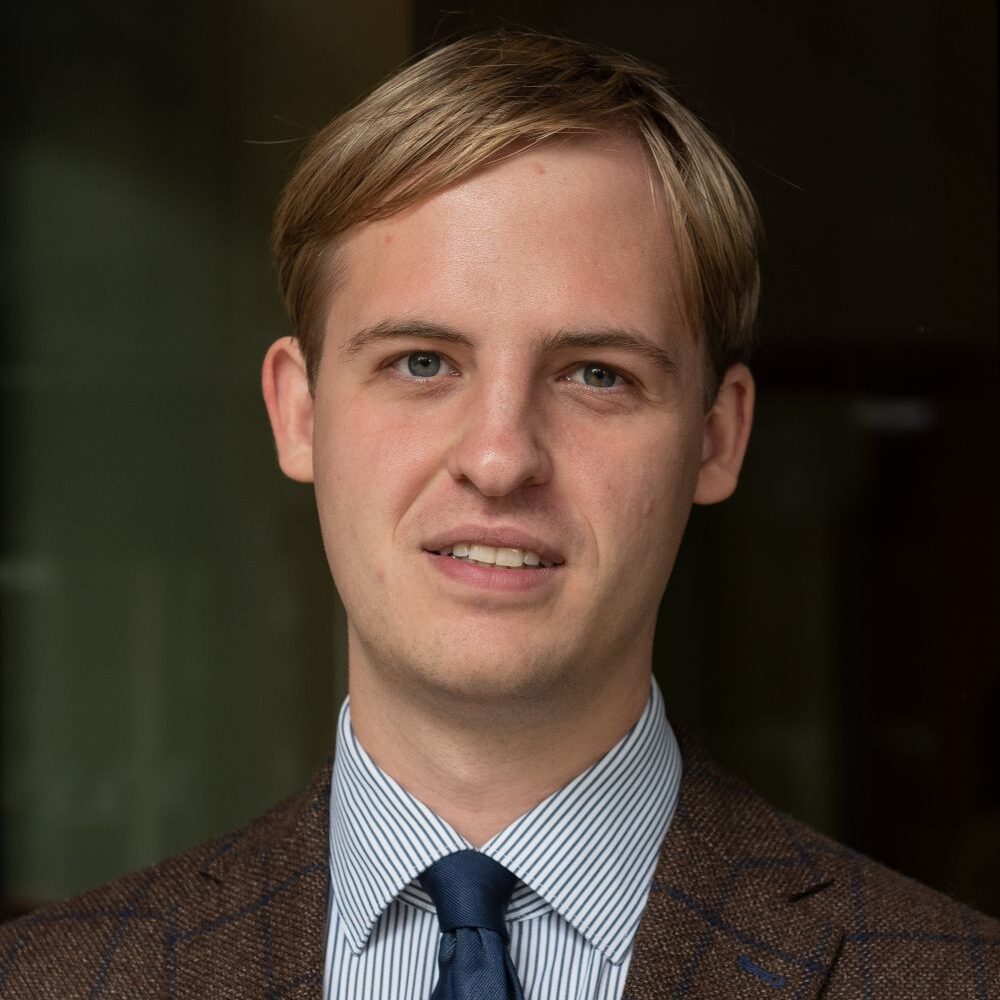
Dr Péter Juhász
MA Camb, DPhil Oxf
Stipendiary Lecturer
I am a Stipendiary Lecturer in Physics, with an expertise in ultracold atoms and trapped-ion quantum computing.
I teach thermodynamics to second-year undergraduates.
In the study of many-body quantum systems, two of the key tuning parameters are the nature of interactions between the particles and the geometry in which the particles are confined. My DPhil experiment used an ultracold gas of erbium atoms, which, due to their large magnetic dipole moment, interact via long-range dipole-dipole interactions as well as the more usual contact interactions – this helps us investigating the effect of magnetism on superfluidity.
The experiment aims to explore the appearance and consequences of the ‘roton-like’ excitation spectrum (a minimum in the dispersion relation of elementary excitations) which is expected in a dipolar gas for such a trapping geometry. We seek to directly measure the feature in a dipolar gas and then use the tunability of the cold atom environment to more fully map out and understand its consequences for superfluidity. Apart from this, we would like to study the supersolid phase (a phase with both long-range order, like in a solid, and long-range phase-coherence, like in a superfluid) mediated by the long-range interactions, and we would also like to use it as a non-Markovian reservoir for a potassium impurity placed into the erbium bath, which has relevance in quantum computing. Within the project, I was working on the optical dipole trap – with which we can cool, trap and transport erbium atoms between different parts of the experiment, as well as taking the first measurements and studying how a such a magnetic gas can be made homogeneous.
After I finished my DPhil, I switched to trapped-ion quantum computing, where I was embedded in a team working towards building distributed quantum computers.