
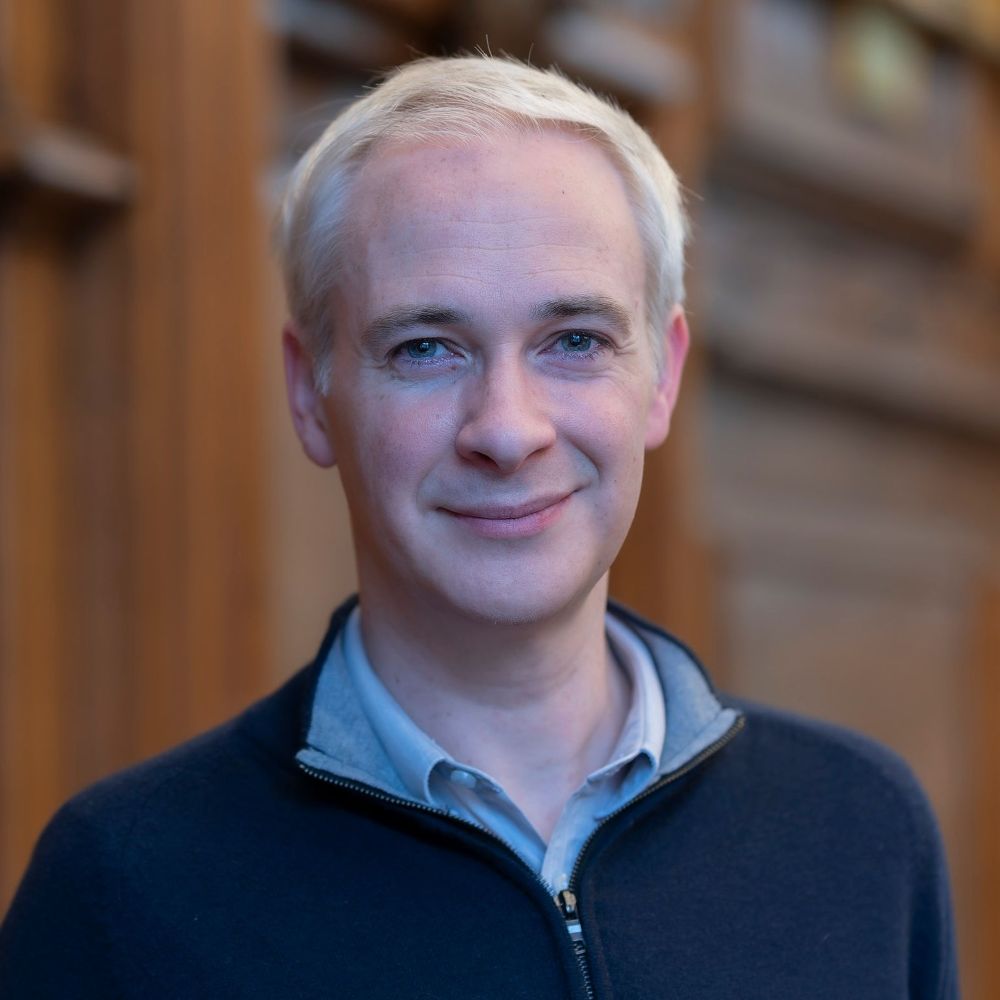
Dr Ian Carroll
BA (Mod) Dubl, MPhil, DPhil Oxf
Stipendiary Lecturer
I grew up in Ireland, just outside Dublin, and studied for my undergraduate degree in political science at Trinity College, Dublin. I came to Oxford for my master’s in political theory and subsequently stayed on for my doctorate. While a student at Oxford, I was a member of Nuffield College. Early in my DPhil studies, I took up a lectureship at Brasenose and have been teaching for the college since.
I teach a range of courses in political theory, from the introductory module for first year students to core and option papers for students in their later years.
For first-year students studying PPE or History and Politics, I teach Introduction to the Theory of Politics. This course includes both elements of contemporary political theory (democracy, liberty, rights, freedom of speech, for instance) and a range of texts from the history of political thought (by John Locke, Jean-Jacques Rousseau, Mary Wollstonecraft, and John Stuart Mill).
For students in their second and third (and occasionally fourth) years, I teach the core Theory of Politics paper and a couple of option papers. Theory of Politics is available to students studying any programme which includes Politics or Philosophy and covers major topics in contemporary political theory, including the nature and justification of political authority, accounts of equality, theories of justice and injustice, feminist theory, liberalism and libertarianism, conservatism and socialism, and others.
For upper-year students in Politics, I teach Political Thought: Plato to Rousseau and the Advanced Paper in Theories of Justice. Plato to Rousseau is a paper engaging with texts from authors writing in the classical, medieval, and early modern periods, from Plato and Aristotle, through Thomas Aquinas and Niccolo Machiavelli, to the later social contract theories of Hobbes, Locke, and Rousseau (and their critic, David Hume). The Advanced Paper covers a range of specialist topics in contemporary political philosophy, including sections on international trade and migration, universal basic income, climate justice, justice for future generations, rectification of historic injustice, the political theory of healthcare and disability, and the role of children in theories of justice.
In my research, I’m interested in questions which arise at the intersection of political philosophy and economics.
One strand of this research covers what are known as ‘contractarian’ social contract theories, in which citizens are modelled as rational bargainers negotiating the terms of their interaction. My work in this area studies the idealised account of rational bargaining underpinning such theories, with a particular focus on the prospects for justifying egalitarian outcomes given contractarian starting points and on the role coalition dynamics can (and should) play in these theories.
A second strand of my research examines how banks, money, and monetary policy should be incorporated into contemporary theories of justice. One question in this area is whether standard accounts of political liberalism are sustainable once the analysis moves beyond simple theories of money and banking. I investigate what adaptations to political liberalism might be required as a result. A spin-off question from this line of research involves developing a theory of how best to approach measuring coercion.
My paper “Sin, Tyranny, and the Metaphysics of Money” (co-authored with Dr David Birks) is forthcoming in Ethics.
My commentary on Stefan Eich’s “The Currency of Politics” is available in the inaugural edition of Oxford New Books.