


Dr Rosamund Bartlett is the Royal Literary Fund (RLF) Fellow at Brasenose. The Royal Literary Fund places professional writers in universities to support students with their academic writing, helping them to develop clarity, confidence, and an individual voice. In this interview, the Senior Tutor, Freyja Madsen, speaks with Dr Bartlett about her work with students, the challenges they face in their writing, and how her own career as a writer, translator, and cultural historian informs her approach.
FM: I’d like to start by asking you some questions about your work with our students as the Royal Literary Fund Fellow. What have you found most distinctive about the writing challenges our students face and how do you approach that with them?
RB: I think it varies from subject to subject, and it varies from year to year. In the first year, there are a lot of students who have come straight from school, for example. They are very well supported here but, nevertheless, it feels like they’ve been thrown in the deep end suddenly, having come from a very structured environment where things are really quite straightforward. They’re suddenly having to think on their own and are no longer able to just come up with yes or no answers. And that can be quite frightening.
In my meetings with first year students there’s often discussion about the transition and what’s expected, getting used to a new kind of freedom and a new kind of creativity, because actually that’s part of writing an essay, isn’t it? It’s worth always remembering that in an essay, you’re literally essaying something; you’re trying something out. If it’s your first year, you’ve got 3 more years ahead of you, and you’re just at the beginning of a long journey, so I like to reassure students that it’s okay not to have everything completely worked out at the beginning. There’s room for trying all kinds of different approaches, and when you get to the final year, then you’ve had a bit of practice at it. But by that point, new demands have appeared: you have a better idea of where you are going, and you’re trying to cram in all the reading – it can sometimes be hard to know exactly how much reading you should be doing, how far you should be relying on your own ideas, and how to work with existing scholarship.
FM: Do you usually see students in their first year or do you find that people come to you at all stages of their degrees?
RB: I’ve seen students from all years, both undergraduates and research students. This last year, I’ve seen quite a lot of finalists. Essay topics can be very challenging, and it is useful to be able to talk them through and to go back to the basics of writing an essay. That way you can become aware of any habits that might have become ingrained, in the hope of increasing the intellectual exhilaration and satisfaction of writing well. It is generally helpful to have a sounding board for your ideas when you are writing, whether it’s the RLF fellow or one of your fellow students. It’s important not to assume, for example, that there is just one answer to an essay. There are many ways to approach an essay topic, which first needs to be unravelled like a ball of wool. A lot of my discussions with students are therefore about learning to ask salient questions and not drawing conclusions too quickly. I think the RLF Fellows can also come at things from a completely different angle because we’re looking at the work from outside of the academic discipline, from the point of view of clarity and structure. This means we can ask quite naïve questions when the writing is opaque, but having to explain your subject in layman’s terms can actually be a very valuable exercise in communication skills.
FM: When you’re working with students who are trying things out and finding what works, how do you balance helping them work towards clarity, but also towards developing their own unique writing voice?
RB: I think it’s one and the same a lot of the time. Sometimes what I’m reading in an essay or thesis chapter draft doesn’t always make sense, and that’s because it requires a great deal of intellectual effort both to articulate an argument, and to acquire the necessary tools to proof-read rigorously. So I try and help students to become their own critics – to write simple English in sentences that aren’t too long and in paragraphs that aren’t too short, with careful thought even about such small but important details as punctuation. When things aren’t clear, I often ask students “what do you actually mean when you say this?” I will usually then get a wonderful, articulate explanation which is far superior to that in the draft, and to the “bookish” language students sometimes feel they should be aspiring to. I know from my own experience as an undergraduate that it’s easy to have a passive understanding of one’s subject, but writing’s active, and you’ve got to be able to communicate your ideas in an essay. In helping to tease out of the students what they actually want to say, I try and help them remember that they are writing for someone else, that there is always a reader involved, that it is a two-way process.
I think the question of finding your own voice is ultimately what it’s all about, isn’t it? It’s about taking your own position on things and not being afraid to challenge received opinion. You’re not expected as an undergraduate to make an original contribution to scholarship, but essays are a brilliant way of helping you engage with primary sources and the secondary reading so you can form your own viewpoint and acquire vital skills of critical analysis. I think if you can write in your own voice, your work is so much more exciting for examiners and tutors to read, and clarity of expression is intimately connected to clarity of thought.
FM: One of the things that has come up in almost every meeting, every working lunch, every event I’ve attended recently is AI. Do you think the role of the RLF Fellow changes in response to AI?
RB: This is my 2nd year of a two-year post, and AI really didn’t come up in conversations about RLF tutorials last year, but it has this year. It’s something that we have to think about increasingly now, and the RLF Fellow’s role is potentially more important in nurturing individual endeavour in the sphere of writing.
FM: I know a couple of our tutors have asked AI to generate a model answer and then asked the students to critique that writing.
RB: That’s a really good idea. It should help the students to challenge AI and recognise both its advantages and limitations.
FM: Is there one particular piece of advice you find yourself giving most often and is it something you apply to your own writing?
RB: The one thing that I find myself talking about again and again is leaving enough time for writing and revision. A lot of students feel so much time pressure, and it’s a scary thing, writing essays on difficult topics in a limited amount of time. It involves a lot of hard mental work and inevitably, we’re all human,so we leave things to the last minute. I try and talk to students about time management. Quite often, they might have a whole week, or at least three or four days to complete an essay, but they will confess that they only spend a day on the writing part. Then they might submit the essay without reading it through. So yes, the best advice I can give is to leave more time for revision. It’s also really important to try and defamiliarise yourself with what you’ve written, perhaps by double-spacing, or reading aloud, because you can then pick up on grammatical or spelling errors that you might otherwise have missed, and notice any long sentences with convoluted syntax, infelicitious phrasing or insufficient punctuation.
FM: What have you been writing recently?
RB: Over the last couple of years, I’ve had a lot on my plate as a writer and a translator, and also as an editor. My main project is the completion of a history of early modernism in Russia, in which I am telling the story of how artists, musicians and writers spearheaded a cultural renaissance in the years leading to the 1905 Revolution. When we think about Russian modernism, we might think of Malevich, who painted the Black Square, Kandinsky, who was the first abstract painter, or Stravinsky, who wrote one of the seminal works of the 20th century, The Rite of Spring, all of whom were active on the eve of World War I. I’m attempting to articulate the processes of transition between the age of the realist novel and these radical experiments with form, when Russian artists suddenly and belatedly became leaders of the European avant-garde, which involves exploring questions of patronage, and challenges to traditional hierarchies. My writing draws on scholarly research, but is aimed at the general reader, and I regard the communication of my subject to the wider public to be an important part of my work. Just recently I wrote an article for the programme of Gorky’s Summerfolk, currently on at the National Theatre, which draws directly on the last chapter of my book. This is a play set on the eve of the 1905 Revolution which fires a broadside at the intelligentsia, and can be seen as a direct satiric response to Chekhov’s The Cherry Orchard, performed the same year.
Chekhov is another major focus of my work as a writer and translator. I run a small charity called the Anton Chekhov Foundation, and one of our projects has been to produce the first comprehensive annotated translation of his earliest stories. To give people an experience of literary translation and encourage the study of Russian, we recruited over 80 volunteer translators from all around the world, and after a long editorial process our book came out in November last year. Now I am free to go back to completing my second anthology of translations of Chekhov’s later stories for Oxford World’s Classics. I am currently working on his first masterpiece “The Steppe”.
FM: Does working on translation change how you read and you write in your own words?
RB: It does actually. I was already translating Chekhov’s stories when I received an unexpected invitation to write his biography. I found that my inspiration for telling the story of Chekhov’s life and even how I structured the biography came out of the intimate experience of translating his prose. The impact on my writing was great, because Chekhov is a master of concision – so a model for anyone writing essays! I found myself continually looking at my own sentences and finding them too long, and my paragraphs too wordy. Writing an article on Chekhov’s artistic use of punctuation was also very fruitful.
The situation was quite the reverse when I started writing a biography of Tolstoy and translating Anna Karenina. We think of Tolstoy as incredibly easy to read, but his writing is complex. He aspired to write using a very simple language, but he was a rebel in all things, including his literary style, and couldn’t stop himself writing sentences which are very long (one contains 125 words), or packed with subordinate clauses. I soon found myself – without noticing it – writing overly complicated sentences myself. That reminds me: when these books came out, I did an interview for The Guardian in which I was asked if I had any writing tips. My answer was two words: read more, and I would give the same advice to students wanting to improve their writing in essays. Read more, and read widely, not just in your subject field.
FM: When writing biography, I imagine there is quite a balance to strike between scholarship and storytelling. What do you decide to leave out?
RB: It’s a bit like a translation – every generation can benefit from a new interpretation of a great literary masterpiece, and new scholarship which emerged as the Soviet Union collapsed has enabled our views of Russian writers to change. But it’s important to wear one’s learning lightly, and you don’t have to say everything to convey the essence of a life if you can find the right structure. I took a leaf out of Chekhov’s own book when writing his biography. He has a very impressionistic, whimsical style, which inspired my own approach to telling the story of his life, which is structured round his relationship with place, which was generally far more uninhibited than with most of his contemporaries.
FM: Has your time with students as the RLF Fellow changed the way you work?
RB: I think it’s given me a greater humility, because I’ve come across so many brilliant students. Everyone I’ve seen has been so interesting, and their essays have been on fascinating subjects. I also think every writer of essays, books and articles always has something new to learn, and I’ve recognised, as a hopeless procrastinator myself, whose writing life is governed by deadlines, that I’m still in many ways a student aspiring to write well.
Read more about Rosamund
Explore more news
-
LATEST NEWS
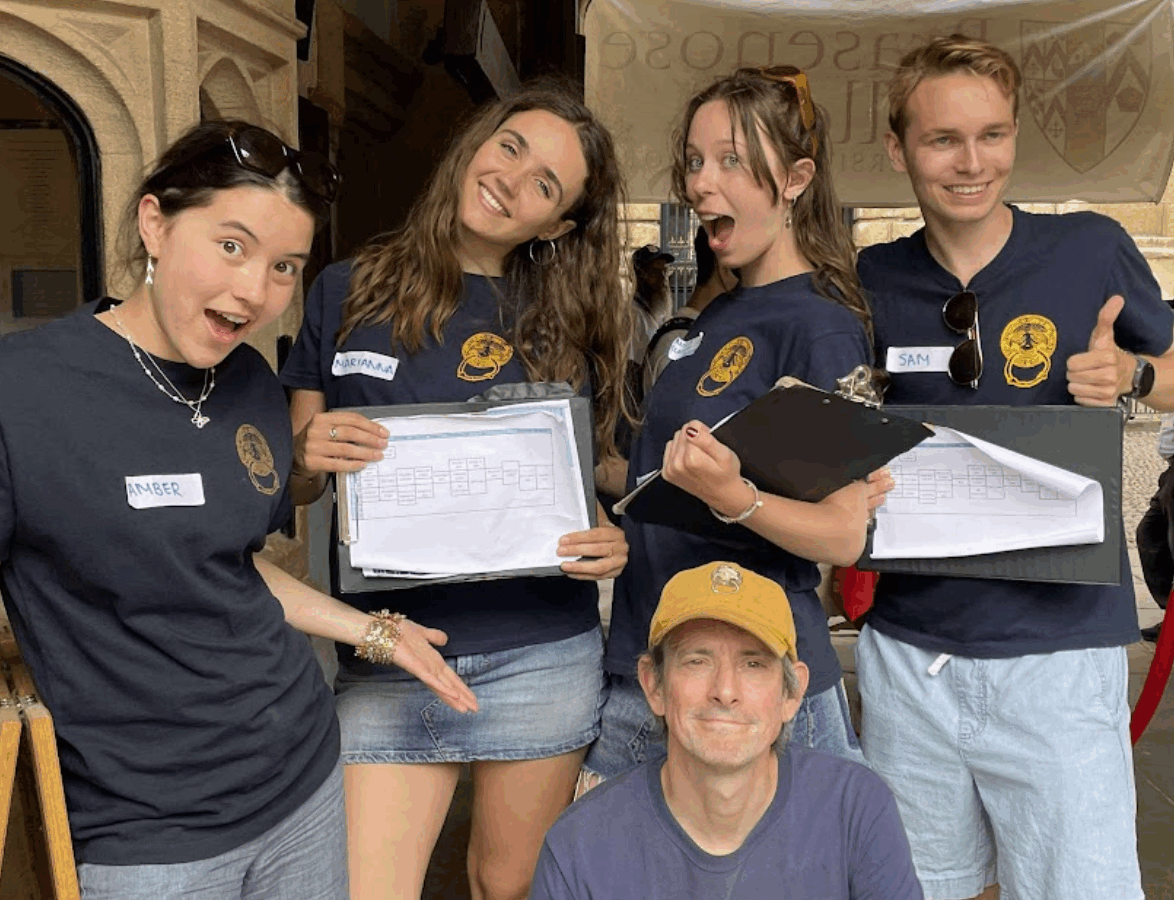
Open Days September 2026 - come visit!
Published 3rd September 2026
The next undergraduate Open Days at Brasenose College and the University of Oxford are taking place on Friday 18th September. We will be open from 9am to 5pm – there is no need to book!
-
LATEST NEWS
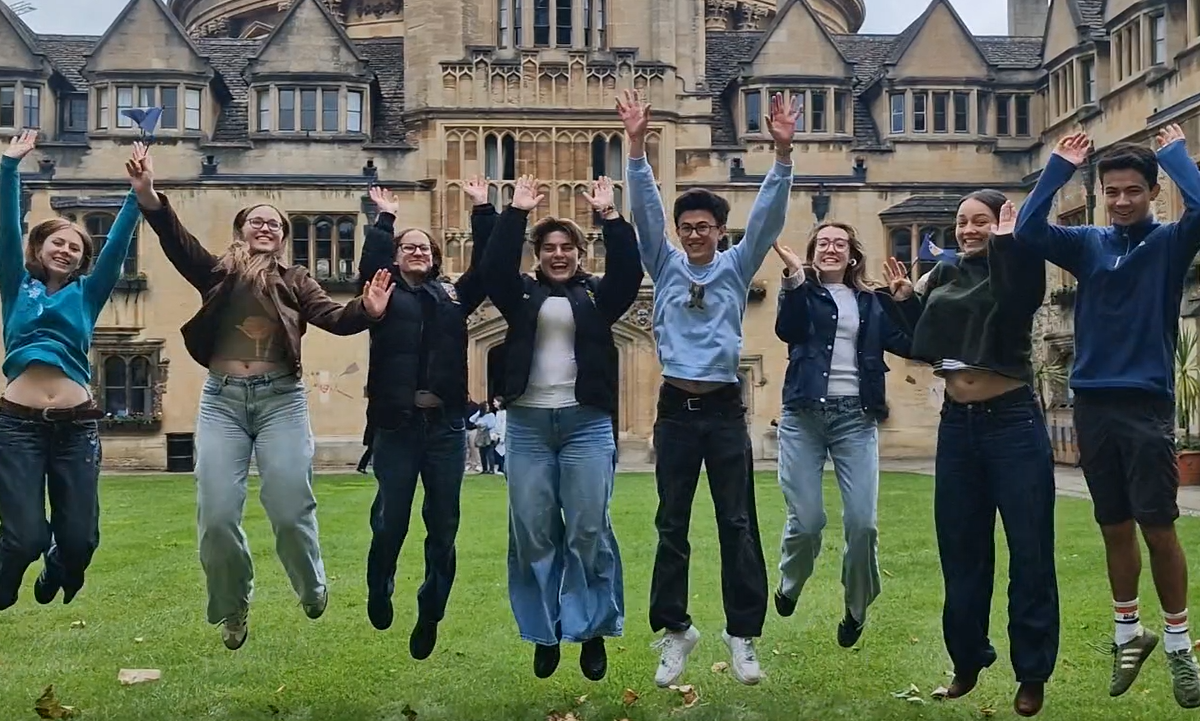
Giving Day 2026 is on it's way
Published 2nd September 2026
A new cohort of undergraduates start at Brasenose in the next few weeks with no doubt a mix of emotions. Does this take yourself back to that very first week at Brasenose? Were you excited, scared, nervous? Will you join us in commemorating those first few days in a new home by giving and supporting many more weeks at Brasenose?
-
LATEST NEWS
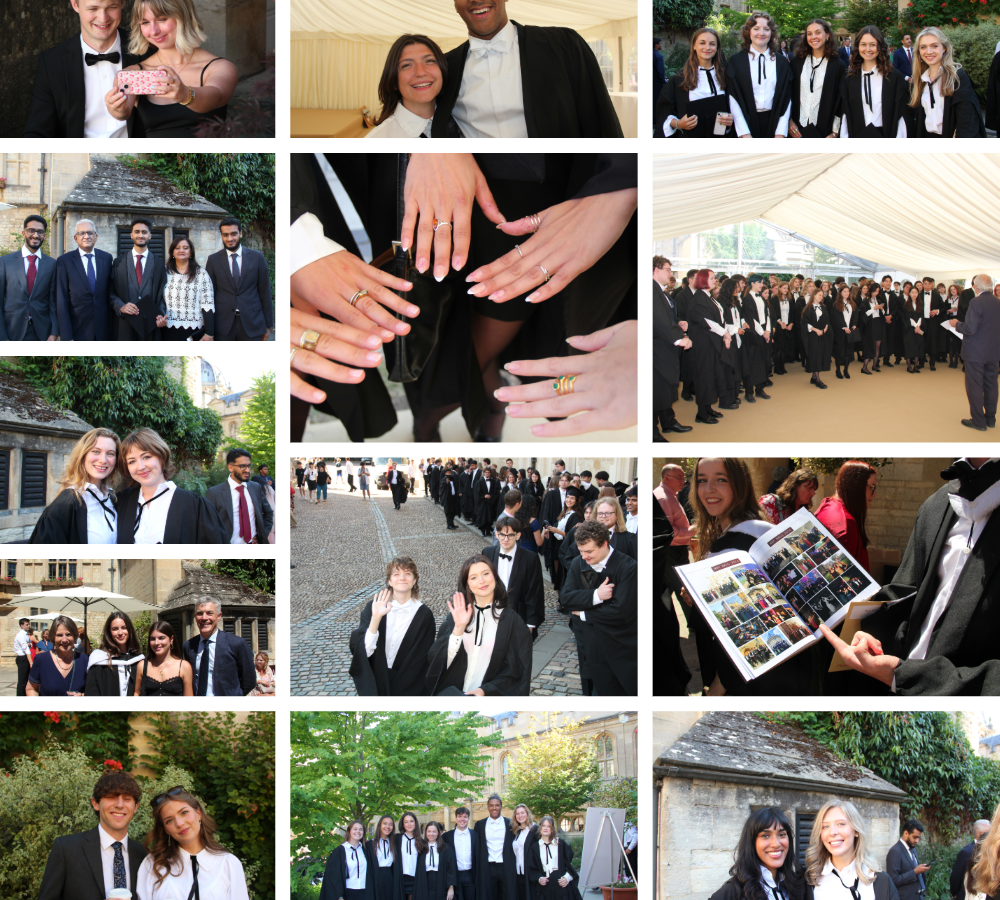
Brasenose College Graduation 2026
Published 4th August 2026
On the last day of July our graduating students returned to Brasenose College for a fantastic sun-soaked graduation ceremony and to celebrate all their achievements.