
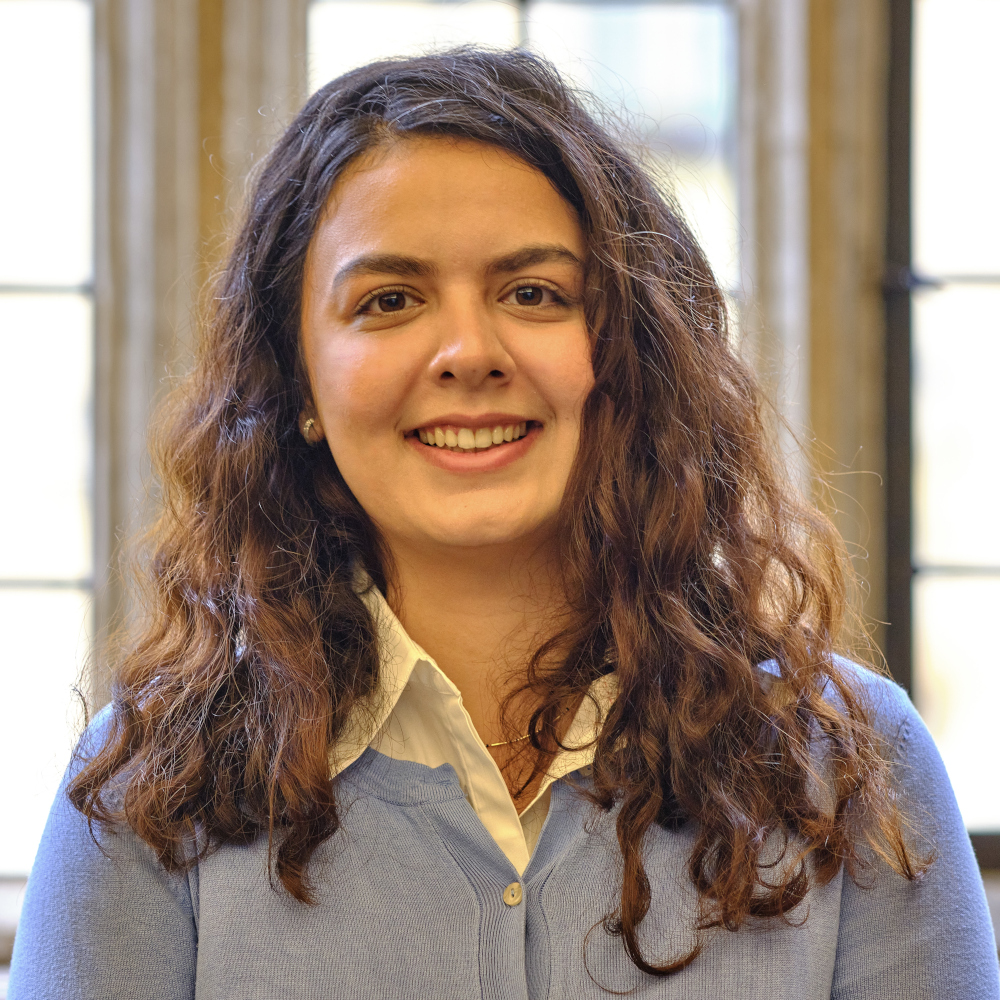
Dr Esra Sengul
BSc Istanbul, MSc Sabanci, DPhil Oxf
Junior Hulme Research Fellow
I obtained my BSc in Molecular Biology and Genetics from Istanbul University, where my thesis focused on identifying small RNA biomarkers for the early detection of thoracic aortic aneurysm and dissection. I then completed an MSc in the Biomechatronics Group at Sabanci University, investigating how biophysical forces and cell deformability shape cellular heterogeneity and tumour–immune interactions.
In 2021, I was awarded the Clarendon Fund and Oxford Medical Research Council Scholarship to pursue a DPhil in Physiology, Anatomy and Genetics at the University of Oxford. My doctoral research explored the cellular and molecular mechanisms that enable certain animals to regenerate their hearts. Working with the Mexican cavefish, I identified how the timing and persistence of immune cell activity determine whether the heart regenerates or scars.
In 2025, I joined Brasenose as a Hulme Junior Research Fellow in Medicine. Here, I will investigate how epicardial fat and immune cells guide heart repair and how environmental adaptation shapes regeneration, with the long-term goal of helping the human heart to repair itself after injury.
Alongside my research, I teach organic chemistry, deliver tutorials on heart development, and supervise student projects, with a strong commitment to inclusive teaching.
My research focuses on understanding how the heart repairs itself after injury and why this process succeeds in some animals but fails in others. During my DPhil work at the University of Oxford, I studied heart regeneration in the Mexican cavefish, a single species that exists in two contrasting forms: surface-dwelling one capable of complete cardiac regeneration and bling cave-dwelling one that heals with scarring, similar to the human heart. Using single-cell sequencing and validation, we discovered that regenerative success depends on a finely tuned and prolonged immune response, driven by macrophages and B cells that coordinate tissue repair and cardiomyocyte proliferation.
As a Hulme Junior Research Fellow at Brasenose College, I am expanding this work to explore how metabolism and the immune system cooperate during heart repair. I am particularly interested in how the epicardium communicates with immune cells to influence regeneration. Early evidence suggests that this cross-talk may determine whether the heart regenerates or scars.
Through a combination of comparative biology, fieldwork, and single-cell and spatial transcriptomics, my research aims to reveal how evolution and environment have shaped the heart’s ability to heal. In the long term, I hope our findings will bring us closer to activating regenerative pathways in the human heart, helping it to repair itself after injury.
Lekkos K, Hu Z, Nguyen P.D., Honkoop H, Sengul E, Alonaizan R, Koth J, Ying J, Lemieux M.E., Kenward A, Keeley S, Spanjaard B, Kennedy B.W.C., Sun X, Banecki K, Potts H.G., Ruggiero G, Montgomery J, Panáková D, Junker J.P., Heather L.C., Wang X, Gonzalez-Rosa J.M., Bakkers J, Mommersteeg M.T.M. Oxidative phosphorylation is required for cardiomyocyte re-differentiation and long-term fish heart regeneration. Nature Cardiovascular Research volume 4, pages 1363–1380 (2025). https://doi.org/10.1038/s44161-025-00718-x
Sengul E, Potts H.G., Stockdale W.T., Carter R.D., Bevan L, Nozdrina M, Alonaizan R, Hu Z, Goodship A, Ying J, Lekkos K, O’Byrne L, Lemieux M.E., Richardson R.E., Mommersteeg M.T.M. Absence of a prolonged macrophage and B cell response inhibits heart regeneration in the Mexican cavefish. biorXiv 2025. https://doi.org/10.1101/2025.04.24.650152
Ying J, Louca I, Koth J, Killen A, Lekkos K, Hu Z, Sengul E, Stockdale W.T., Wang X, Mommersteeg M.T.M. Injured endocardium obtains characteristics of haemogenic endothelium during adult zebrafish heart regeneration. biorXiv 2024. https://doi.org/10.1101/2024.12.18.629122
Sengul E. & Elitas M. “Single-Cell Mechanophenotyping in Microfluidics to Evaluate Behavior of U87 Glioma Cells” Micromachines, 11(9), 845. https://doi.org/10.3390/mi11090845