

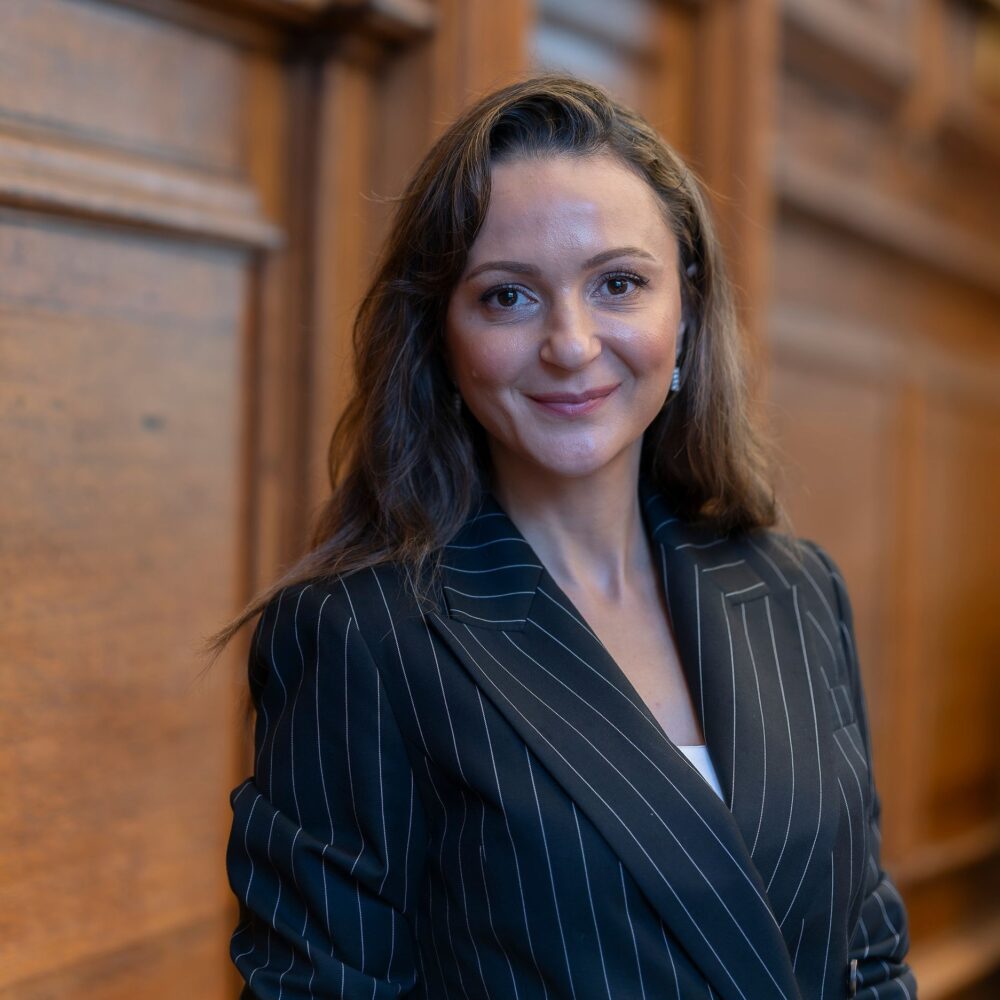
Professor Samira Lakhal-Littleton
Bsc (Hons), DPhil (Oxon), FESC
Tutorial Fellow
I completed a DPhil in Molecular Medicine at the University of Oxford in 2007, then joined the laboratory of Sir Prof Peter Ratcliffe as a postdoctoral researcher. There, I investigated the interplay between Hypoxia Inducible Factors (HIFs) and iron homeostasis. My research findings defined the molecular mechanisms underlying this interplay, e.g. I discovered that TMPRSS6 and GDF15, known regulators of the iron homeostatic hormone hepcidin, are both responsive to hypoxia. I also collaborated with clinician scientists to uncover how hepcidin is regulated by hypoxia at altitude.
In 2013, I secured a BHF Intermediate Research Fellowship and became an independent principal investigator. At the time, iron research pivoted on one of two axes; the cellular axis, controlled by iron regulatory proteins (IRPs), and the whole-body (systemic) axis, controlled by ferroportin in the gut and spleen, and by its antagonist hormone hepcidin. During my BHF fellowship, I discovered that many cell types use ferroportin and hepcidin to finetune intracellular iron levels, thus revealing the crosstalk between the cellular and systemic axes of iron regulation. I defined the molecular mechanisms of this crosstalk and demonstrated its fundamental importance for the function of the heart, the pulmonary vasculature, the liver, the kidney, and the systemic vasculature, and collaborated with others to discover a similar mechanism in immune cells, retinal cells , gut mucosa, and colorectal cancer. These discoveries are important because they provide a long-sought mechanism for why factors that perturb the systemic iron axis, e.g. inflammation, hypoxia, pregnancy also perturb the physiological functioning of certain organ systems.
In 2021, I secured a £2m Senior Research Fellowship from the Medical Research Council (MRC). The aim of this fellowship is to build on the discoveries I made during the BHF Fellowship, in order to enhance our underatsnding of the clinical consequences of iron deficiency and to change clinical practice on iron supplementation, especially in patients with heart failure. My team and I have already mapped many of the basic discoveries onto actionable clinical targets.
I have secured ~£7 million in research funding, including ~£3.5 million as principal investigator. As of August 2025, the cumulative impact factor of my publications is 744, including 545 as leading or senior author.
RESEARCH LEADERSHIP
Member of the Medical Research Council Experimental Medicine Panel
Member of the Royal Society Research Grants Committee: Biological Science
Member UK Research & Innovation (UKRI) Interdisciplinary Assessment College
Board of Directors of the International BioIron Society
Steering Committee and mechanistic lead for FRAIL-ID clinical trial “effect of intravenous versus oral iron supplementation on physical performance in iron deficient FRAIL elderly IndiviDuals with cardiovascular disease” lead by Prof Ewa Jankowska
Steering Committee and mechanistic lead for INFERRCT clinical trial “Effect of INtravenous FERRic Carboxymaltose on morTality and Cardiovascular Morbidity, and Quality of Life in Iron Deficient Patients With Recent Myocardial infarction” lead by Prof Piotr Ponikowski
International expert panel for PANDA: Prevention of Anaemia in Pregnancy
SELECTED PRIZES AND AWARDS
Fellowship of the European Society of Cardiology (FESC)
Physiological Society’s Bayliss-Starling Prize Lecture
Pulmonary Vascular Research Institute Sheila Glennis Howarth Prize Lecture
I lead the teaching of Preclinical Medicine at Brasenose. I teach Principles of Physiology, Biochemistry and Medical Genetics to the first years, Applied Physiology and Pharmacology to the second years, and a range of Final Honours school (FHS) options to the third years, including Cardiovascular Sciences, Endocrinology , and Applied Human Physiology. I also deliver a number of Lectures to all three years of Preclinical Medicine at Faculty Level.
I also lead Medicine admissions at Brasenose. Together with my colleagues, we seek the select the best and brightest to join the course. Through my teaching, I am passionate about fostering the next generation of clinician scientists.
Unique biochemical properties underpin the essential functions of iron in oxygen transport and oxidative phosphorylation. Those same properties also underpin its propensity to participate in Fenton-type reactions, producing cell-damaging reactive oxygen species. Thus, tight control of iron levels within tissues is paramount for normal physiological function, particularly in tissues of high oxygen demand/flux.
My research focusses on understanding the impact of too little or too much iron on the cardiovascular system, and on translating that understanding into better management of iron status in chronic disorders. Examples of my recent translational work include:
Discovering the impact of intravenous iron therapies on iron levels in different tissues
-Vera-Aviles, M., Kabir, S. N., Shah, A., Polzella, P., Lim, D. Y., Buckley, P., Ball, C., Swinkels, D., Matlung, H., Blans, C., Holdship, P., Nugent, J., Anderson, E., Desborough, M., Piechnik, S., Ferreira, V., & Lakhal-Littleton, S✉. (2024). Intravenous iron therapy results in rapid and sustained rise in myocardial iron content through a novel pathway. European heart journal, 45(42), 4497–4508. https://doi.org/10.1093/eurheartj/ehae359 *This work was highlighted in a special issue by the editor https://doi.org/10.1093/eurheartj/ehae752 and an accompanying editorial was invited https://doi.org/10.1093/eurheartj/ehae560.
-Piechnik, S. K., Polzella, P., Shah, A., Vera-Aviles, M., Kabir, S. N., Desborough, M., Ferreira, V. M., & Lakhal-Littleton, S✉. (2025). Myocardial iron intake following intravenous iron therapy with ferric carboxymaltose is sustained at 1 year despite recurrence of iron deficiency. British journal of haematology, 206(1), 349–352. https://doi.org/10.1111/bjh.19915
Mapping basic discoveries onto clinical targets;
-Lakhal-Littleton, S✉., & Cleland, J. G. F. (2024). Iron deficiency and supplementation in heart failure. Nature reviews. Cardiology, 21(7), 463–486. https://doi.org/10.1038/s41569-024-00988-1
-Lakhal-Littleton S✉. (2025). Anaemia, neurohormonal activation, and myocardial iron depletion in heart failure: can this vicious circle be broken?. European heart journal, 46(16), 1524–1527. https://doi.org/10.1093/eurheartj/ehae798
Lakhal-Littleton, S✉., (2025) Iron deficiency in heart failure. Iron in Clinical Practice. edited by Sue Pavord and Noemi Roy. ISBN: 978-1-394-21090-9. https://www.wiley.com/en-us/Iron+in+Clinical+Practice-p-9781394210909
-Cleland, J. G. F., Pellicori, P., & Lakhal-Littleton, S. (2024). Low Serum Ferritin Might Predict Incident Heart Failure: But Why and Is It Clinically Useful?. JACC. Heart failure, 12(3), 549–551. https://doi.org/10.1016/j.jchf.2023.12.01
Revealing that inflammation traps iron in the spleen after intravenous iron therapy
-Nunez, J., Mollar, A., Vera-Aviles, M., Kabir, S., Shah, A., Polzella, P., Desborough, M., Cardells, I., Miñana, G., Del Canto, I., Ferreira, V., Piechnik, S., Maceira, A., & Lakhal-Littleton, S✉. (2025). Baseline serum ferritin predicts myocardial iron uptake following intravenous iron therapy – a hypothesis-generating study. European journal of heart failure, 10.1002/ejhf.3730. Advance online publication. https://doi.org/10.1002/ejhf.3730
Uncovering the impact of iron status on long-term outcomes of myocardial infarction
-Vera-Aviles, M., Kabir, S.N., Christodoulou, M.D., Shanmuganathan, M., Kotronias, R., Cleland, J.G.F., OxAMI investigators, Channon, K.M., Lakhal-Littleton, S✉.(2025) Hypoferremia reduces long-term risk of major adverse cardiovascular events after STEMI by averting the myocardial reactive iron storm. medRxiv 2025.01.13.25320244; doi: https://doi.org/10.1101/2025.01.13.25320244
Vera-Aviles, M., Kabir, S. N., Shah, A., Polzella, P., Lim, D. Y., Buckley, P., Ball, C., Swinkels, D., Matlung, H., Blans, C., Holdship, P., Nugent, J., Anderson, E., Desborough, M., Piechnik, S., Ferreira, V., & Lakhal-Littleton, S. (2024). Intravenous iron therapy results in rapid and sustained rise in myocardial iron content through a novel pathway. European heart journal, 45(42), 4497–4508. https://doi.org/10.1093/eurheartj/ehae359
Lakhal-Littleton, S., & Cleland, J. G. F. (2024). Iron deficiency and supplementation in heart failure. Nature reviews. Cardiology, 21(7), 463–486. https://doi.org/10.1038/s41569-024-00988-1
Lakhal-Littleton, S.(2025) Iron in Clinical Practice. https://doi.org/10.1002/9781394210916.ch11